Digital Humanities Associate End of Year Reflection – Aiden Johnson

My time this year as a DHA has truly opened my eyes to the world of Digital Humanities. Before becoming a DHA, I had only a blurry understanding of what Digital Humanities was as a field of study and practice. Through this experience, however, I have gained a much deeper recognition towards the ways technology, data, and communication interplay to create engaging works that integrate new styles from traditional humanities. Working and collaborating with such an amazing group of staff has transformed my perspective of digital humanities and digital scholarship – and has strengthened my understanding

Throughout the year, I had the opportunity to work on a wide range of projects that helped me develop both technical and collaborative skills. I contributed to Omeka metadata work, and I spent a significant amount of time creating and editing WordPress websites – such as some of Carleton’s official blogs as well as blogs for different history classes. This has given me a greater understanding of web design, user experience, and how digital platforms shape the way information is presented and understood.

In addition, I was able to continue fine-tuning my skills in ArcGIS and digital mapping – such as the Migration and Mobility mapping project. I have become more confident in using spatial data and visualization tools to communicate information in engaging ways.

One of the most exciting outcomes of my time as a DHA is that I was selected to develop my own Digital Humanities project this summer at Vassar College’s Ctrl-Alt-Delete Retreat. This opportunity would not have been possible without the mentorship and encouragement, I gained throughout this year. Being a DHA has given me the confidence to pursue larger independent projects and has shown me how Digital Humanities can be used as a powerful tool for research, communication, and creativity.

Overall, this year has been incredibly rewarding both academically and personally. I am grateful for everything I have learned, the people I have worked with, and the opportunities this position has opened for me. My experience as a DHA has not only introduced me to new technical skills, but has also fundamentally changed the way I think about scholarship, collaboration, and the role of digital communication in the humanities.

I would like to express my gratitude for all of my Digital Humanities staff including Austin Mason, Sarah Calhoun, Em Palencia, Wiebke Kuhn, and Ariel Kay. As well as my awesome DHA coworkers Nina and Zhoukai.

I am excited for what the future has in place for me this next coming year!

Digital Humanities Associate End of Year Reflection

Working as a Digital Humanities Associate — collaborating with the DH team, faculty, and students — was a genuinely enlightening experience that deepened my understanding of how digital tools can transform humanistic inquiry. My introduction to the field came through “Hacking the Humanities,” taught by Professor Austin Mason during my freshman winter, which grounded me in both theoretical frameworks and interdisciplinary practice. The DHA role extended that foundation, connecting me to meaningful projects across campus and sharpening my interest in academic civic engagement.

Mapping Japan Project

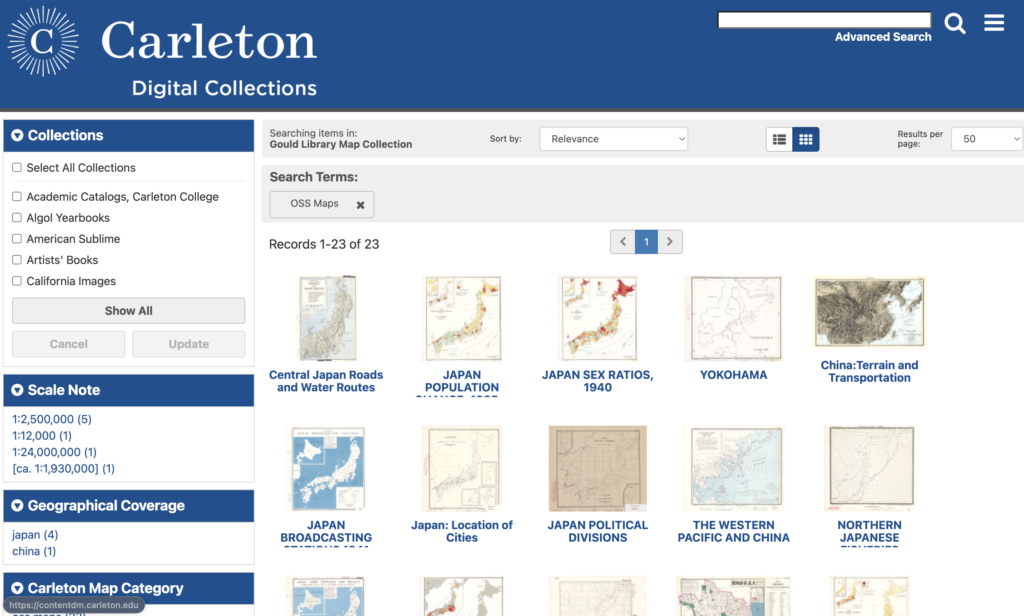
The highlight of this academic year was my continued work on the Mapping Japan Project. Since my freshman year, I have served as a Research Assistant for Professor Asuka Sango, analyzing and indexing Japanese military maps from World War II held at the Gould Library. The index draws primarily from Tohoku University’s cataloging system, with an emphasis on accessibility and utility for Japanese researchers. As a DHA, I was able to approach the same project from a new angle — researching metadata frameworks used by institutions in both Japan and the United States, and evaluating how they might be integrated or prioritized. I applied these insights to Carleton’s Digital Collections platform, working closely with Katie Lewis, Hsianghui Liu-Spencer, and Wei-Hsin Fu. A particular highlight was implementing IIIF annotation functionality within the Omeka S site, a feature directly inspired by my final project in “Hacking the Humanities.”

Indigenous History Initiatives

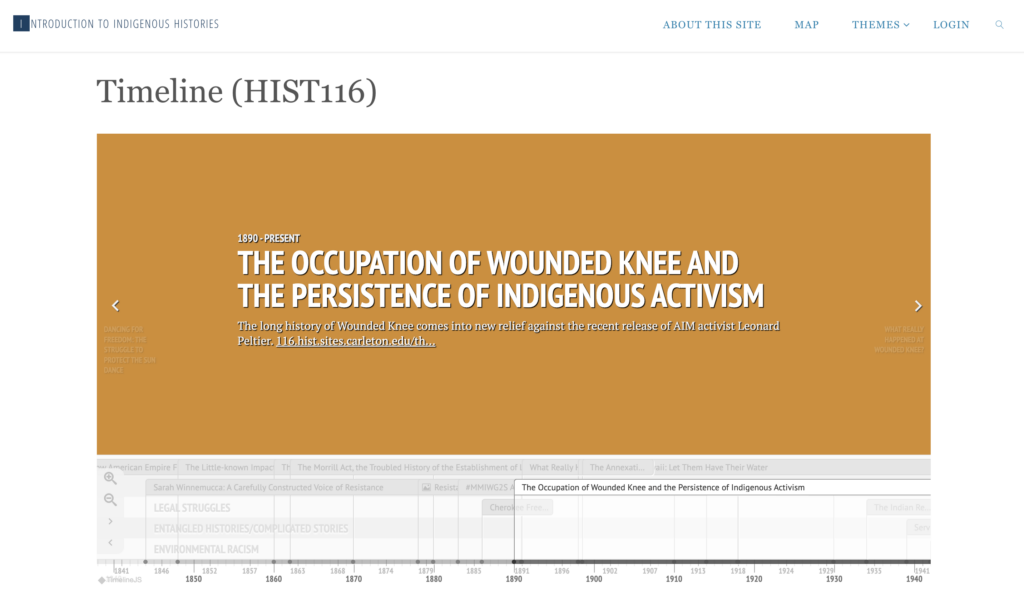
I also contributed to digital projects supporting Professor Meredith McCoy’s work on Indigenous history, which incorporates StoryMaps and interactive timelines as part of the Indigenous Engagement in Place initiative. This work resonated with me deeply, as it centers underrepresented histories and demonstrates how digital tools can serve as a vehicle for recovery and visibility, making marginalized narratives more accessible and compelling to broader audiences.

Undergraduate Journal of Humanistic Studies

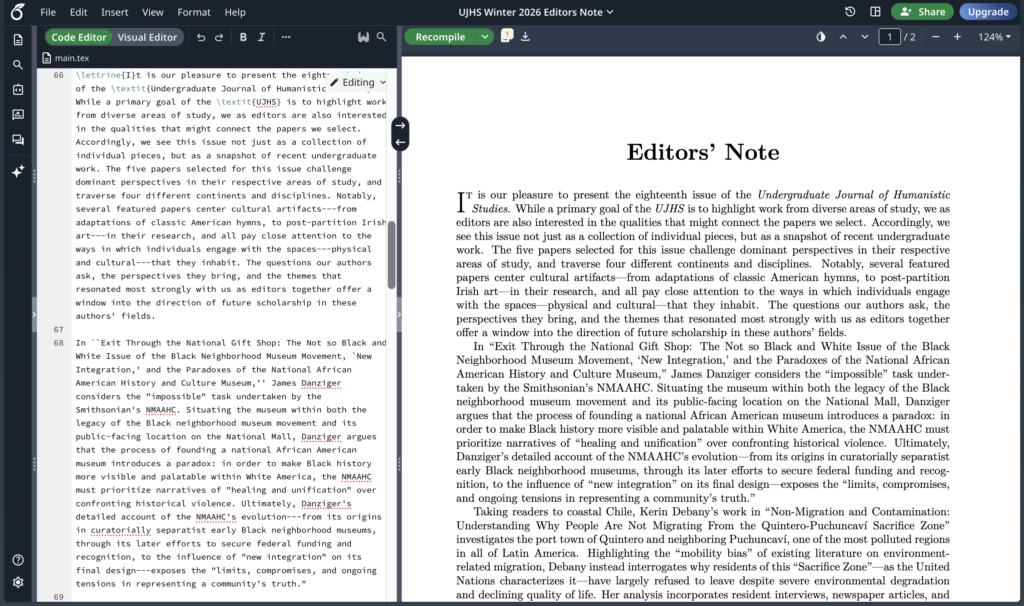
Additionally, I supported the Undergraduate Journal of Humanistic Studies by working on LaTeX formatting, contributing to conversations around publication design and the presentation of scholarly work.

 Across all three projects, a common thread emerged: my commitment to academic civic engagement and the democratization of humanistic knowledge. Scholarly research in the humanities has long been confined to traditional academic formats, but I am genuinely interested in how digital tools can make that research more intuitive, interactive, and accessible to general audiences. As I move forward with my Mellon Mays Undergraduate Fellowship and my senior comprehensive project in Political Science and Anthropology, I hope to draw what I have learned as a DHA, using digital tools not just as a means of presentation, but as a mode of thinking and communicating ideas more fully and effectively!

Acknowledgments

I am deeply grateful to everyone who made this experience so meaningful. Special thanks to Sarah Calhoun, Wiebke Kuhn, Austin Mason, and Em Palencia for their mentorship, guidance, and unwavering support throughout the year. Special thanks to Aiden Johnson and Zhuokai Yuan for their collaboration, creativity, and camaraderie as fellow DHAs.